Showing posts with label The English Hymnal. Show all posts

Sunday, December 29, 2019

Victorian Christmas Anachronisms

The 19th century brought not on the rise of distinctively English hymns and carols, but also anachronistic characterization of Bethlehem winters. @LutheranSatire has been particularly caustic in its evaluation, with Pastor Hans Fiene (in his alter ego M. Luther) ridiculing two Victorian gentlemen as they compose “Inferior Anglican Christmas Hymns”.

On the one hand, the enthusiasm of Victorian England was admirable, as a single hymnal — Hymns Ancient & Modern became the first in Britain (AFAIK in the world) so sell over 8 million copies in less than 50 years (Long 1971; Orford 2017). Nowhere was this enthusiasm greater than at Christmas. As the “Victorian Era” website says
What better way to get into the festive spirit then singing a Victorian Christmas carol. During this era, they were very into joyful choruses of Christmas songs and had revived old medieval songs whilst adding their own spin and writing new ones!

These were meant for both the relaxed occasions such as when singing amongst friends and family and the other songs were meant for more religious, respectful occasions.
And some of the 19th century carols, including many of those by J.M. Neale, were translations or reharmonizations of ancient or medieval hymns that were centuries old. If there was snow involved — as in Neale’s “Good King Wenceslas” — it was in Britain and not 31° N of Bethlehem.

Other winter excesses cannot be traced to the Victorians. This includes the “in kaltem winter” (“cold of winter”) in the 16th century carol “Es ist ein Ros” (“Lo, how a rose e'er blooming” to Anglicans) or the 20th century American secular ditties like “Let it Snow!” (1945) or “Frosty the Snowman” (1950).

Nonetheless, by searching through Hymnary and my Anglican hymnals, I found exactly four Anglican hymns that, to a greater or lesser degree, might attract the scorn of Pastor Luther Fiene. (Although one might be hypocritical for a 21st century LCMS pastor to attack).

1. In the Bleak Midwinter

This poem by English poet Christina Rossetti was commissioned by and published by an American magazine in 1872. It is by far her most popular work (Beall 2015). As a hymn, it has been published in at least 70 hymnals. None of these are by the Missouri or Wisconsin synod Lutherans, but it does appear in the latest (2006) and most ecumenical ELCA hymnal, Evangelical Lutheran Worship.

The first stanza is the one that would cool any appreciation by Pr. Fiene:
In the bleak midwinter, frosty wind made moan,
earth stood hard as iron, water like a stone;
snow had fallen, snow on snow, snow on snow,
in the bleak midwinter, long ago.
As a hymn, it first appeared in The English Hymnal (1906), with a new tune written for this text: Cranham by Gustav Holst. (Yes, that Gustav Holst.) According to Hymnary.org, it accounts for 63/70 of the hymnals printing of the text; six are Castle by Don Cason and one Adventist hymnal that used Uinta by the hymnal’s editor.

However, not found in any hymnal is the 1909 setting of the hymn by Harold Darke — instead in choral anthem books. However, it is a regular favorite of the King’s College Cambridge annual Lessons & Carols service — according to David Sinden, of the last 23 broadcasts, 11 had Darke and two Holst. It was also once voted the best Christmas carol of all time.

2. The Snow Lay on the Ground

For the first Sunday after Christmas, we sang “The Snow Lay on the Ground” (Hymnal 1940: 41; Hymnal 1982: 110; Book of Common Praise 2017: 81; New English Hymnal: 28). Hymnary.org says it appears in 39 hymnals, and quotes Julian (1907) in summarizing its origins as
This appears to be a West of England traditional carol, and is given as such in R. R. Chope's Carols, 1875, No. 44, where it begins "The snow lay deep upon the ground." In the Crown of Jesus, 1862, No. 146, it begins “The snow lay on the ground" and is marked, with regard to the tune, as "Christmas Carol, sung in Rome by the Pifferari from the Abruzzi Mountains." The text of 1862 is in the Arundel Hymnal, 1902, and many others. 
The 39 hymnals include Episcopalian and Catholic Hymnals, but neither Hymns A&M (1861-1904) or The English Hymnal (1906) nor any Lutheran hymnal. Again, it’s the first verse that would boil Fiene’s blood:
The snow lay on the ground,
The stars shone bright,
When Christ our Lord was born
On Christmas night.
Venite adoremus Dominum;
Venite adoremus Dominum.

3. See Amid the Winter's Snow

Surpisingly popular is “See Amid the Winter’s Snow,” penned in 1858 by Anglo-Catholic (turned Roman Catholic) hymnist Edward Caswall. Among the 140 hymnals listed by Hymnary, it’s found in the Anglican hymnals of Canada and Ireland, the 1990 Presbyterian Hymnal, and (natch) numerous Catholic hymnals. (But no Episcopalian or American Anglican hymnals).

Again, the first stanza fits the problematic pattern:
See, amid the winter's snow,
born for us on earth below,
see the tender Lamb appears,
promised from eternal years.
Hail! Thou ever-blessed morn!Hail, redemption's happy dawn!Sing through all Jerusalem,"Christ is born in Bethlehem."
However, it appears that Luther’s influence is limited among the German-American Lutherans, as it is hymn #373 Pastor Fiene’s favorite hymnal — the current (2006) LCMS Lutheran Service Book.

4. ’Twas in the Winter

Here my ignorance is more excusable, as this 1871 text by Irish clergyman Rev. Charles Ingham Black appears in only five hymnals. The most prominent is nearly 150 years ago, from John Stainer’s Christmas Carols New and Old.

I doubt our fussy German-American pastor has heard of this hymn, but if he did, again he’d turn straight to the first verse
’Twas in the winter cold, when earth
Was desolate and wild,
That angels welcomed at His birth
The everlasting Child.
From realms of ever bright’ning day,
And from His throne above
He came with humankind to stay,
All lowliness and love.

Summary

I don’t think four hymns support Pastor Fiene’s claim for a trend for Anglican anachronistic Christmas carols, particularly given there lack of popularity:
  • None was published in the dominant Victorian hymnal, Hymns Ancient & Modern, during Victoria’s life — either the 1861 or 1889 editions.
  • Only one (#1) was found in The English Hymnal, the Edwardian collection of Victorian hymns published in 1906.
  • Only two (#1,#2) were published the American Anglican/Episcopal hymnals of the 20th and 21st centuries. 
  • A third hymn (#3)— as bad as the others — was selected by his LCMS colleagues to be published in his preferred hymnal
So to paraphrase an English playwright back: methinks the pastor doth protest too much.

The most influential 19th century Anglican hymnwriter, John Mason Neale, did not write any Christmas carols (other than Wenceslas) that survive to this day; his best-remembered hymns are for Easter and Palm Sunday. However, his most reprinted Advent hymn — a translation of a medieval Latin text written centuries before Herr Doktor Luther was born — contains exactly the sort of timeless truths Pastor Fiene would espouse.

In its current form (from the 1861 edition of Hymns A&M) , “O come, O come, Emmanuel” is the second hymn in my favorite hymnal (#357 in Pastor Fiene’s hymnal)
Oh, come, Oh, come, Emmanuel,
And ransom captive Israel
That mourns in lonely exile here
Until the Son of God appear.
Rejoice! Rejoice! Emmanuel
Shall come to thee, O Israel.

References

  • Beall, Mary Kay, “In the Bleak Midwinter,” The Hymn, 56, 4 (Autumn 2015), 47-49.
  • Julian, John, Dictionary of Hymnology,  London: Murray, 1907. URL: https://www.ccel.org/ccel/julian_j/
  • Long, Kenneth R., The Music of the English Church (New York: St. Martin’s, 1971), p. 334
  • Orford, Barry A., “Music and Hymnody” in Stewart J. Brown, James Pereiro, and Peter Nockles, eds., The Oxford Handbook of the Oxford Movement (Oxford: Oxford University Press, 2017), 376-386.
  • Christmas Carols New and Old, by Henry R. Bramley & John Stainer (London: Novello, Ewer & Co., 1871). URL: https://archive.org/details/christmascarolsn00staiiala
Update: See further discussion of these four hymn on Dec. 30

Sunday, March 17, 2019

St. Patrick’s doctrine of the Trinity

Today is both the second day of Lent and the (lesser) feast of the great 5th century Irish missionary St. Patrick. For Americans making some effort at lenten discipline, it fortunately falls on a Sunday.

It is not a red-letter saint’s day in the American prayer book, and in fact is not even mentioned in the 1928 Book of Common Prayer at all. However, Eucharistic readings were later provided in the 1963 Lesser Feasts & Fasts, as well as (for the 1979 prayer book) the 1980 Lesser Feasts & Fasts.

Of these, there are only two overlaps. One is the collect
O ALMIGHTY God, who in thy providence didst choose thy servant Patrick to be an apostle to the people of Ireland, to bring those who were wandering in darkness and error to the true light and knowledge of thee: Grant us so to walk in that light, that we may come at last to the light of everlasting life; through the merits of Jesus Christ thy Son our Lord. Amen. 
The collect is not mentioned in the Daily Office of CommonPrayer.org, but (as with other lesser feasts) is included in the daily worship of AnglicanHours.

The other is the Epistle, 1 Thessalonians 2:2-12, which includes this relevant except from St. Paul’s letter to Thessalonica:
But as we have been approved by God to be entrusted with the gospel, even so we speak, not as pleasing men, but God who tests our hearts.”

St. Patrick’s Breastplate

For Anglicans, the mandatory hymn is “I bind unto myself today” (St. Patrick’s breastplate), adapted by Ralph Vaughan Williams for The English Hymnal in 1906. The hymn has three main features
  • The lyric is a catechetical text that teaches the doctrine of the Trinity and is attributed to Patrick, translated by Cecil Frances Alexander. The hymn is thus normally recommended for Trinity Sunday (and of course St. Patrick’s feast day).
  • For the hymnal, Vaughan Williams combined two Irish folk tunes — St. Patrick arranged by C.V. Stanford, and Deirdre, which he arranged for the hymnal. The second tune adds a complexity and difficulty for newcomers.
  • It is a long hymn: nine verses in the 1906 original, but “only” seven verses as introduced to America in Hymnal 1940.
In my interviews on church music practice last fall, it was a (slightly) controversial hymn: everyone loved the doctrine and the memories it evokes. However, the parishioners were split: most loved the complete hymn, but a minority complained that it was too long. (IIRC only one music director regularly abridged the hymn).

The hymn as printed in Hymnal 1940 and Hymnal 1982 has verses 1-5 (with verse 1 shorter) in unison to St. Patrick, verse 6 (in four parts) to Deirdre, and verse 7 in St. Patrick. Hymnary.org has page scans of many of the printed versions, including 
Not included in the page scans are two others that (like the LSB) use a single tune:
  • Worship II (a popular unofficial Catholic hymnal from 1975): verses 1,2,4,5,7 (with one tune)
  • New English Hymnal (1986) #159: verses 1-5 and 7. It includes the comment that “Hymn 278 may be inserted after verse 5 if desired"; while 278 has the words of Verse 6, it’s to Gartan, another Irish tune arranged by Stanford
Thus, this day, it will be American Protestants who carry on Vaughan Williams’ original vision and testimony to the patron saint of Ireland.

Wednesday, December 19, 2018

Veni Emmanuel out of sync thanks to Hymnal 1982

Differences between hymnals — either in updates or between dominations — usually cause confusion due to the change in words. Differences in harmony are also widespread, but only impact those who sing parts (in my experience, less than 10% of those in the pews in most churches).

Earlier this week I witnessed a train wreck that I’d never seen before — due to a difference in the melody that everyone sings. Specifically, the congregation at an Anglican church was confused due to a unique change in the meter made by Hymnal 1982 to the oldest — if not the greatest† — Advent hymn of all time: “O Come, O Come, Emmanuel.”

To cut to the chase, today there are four different meters used for the tune Veni Emmanuel:
  1. There is the original version by John Mason Neale and Thomas Helmore in Hymnal Noted, published from 1851-1854.
  2. There is the way used by Hymns Ancient & Modern, The English Hymnal, the New English Hymnal, and any CD or YouTube video of English choristers that you might listen to. This also appears to be the way that most American Protestant hymnals do it: I’ve looked at Baptist, Lutheran and Methodist hymnals, and they all match this.
  3. There is the version of Hymnal 1940 and its recent update, the REC’s Book of Common Praise 2017.
  4. There is the unique version of Hymnal 1982.
At Sunday’s service, the organ and instruments were doing #4, while the choir and most of the congregation (largely ex-Baptist and Methodist) were doing #2 (perhaps some doing #3). After two verses, everyone gave in to the organ, but the confusion was clearly something that any parish would want to avoid.

1. Hymnal Noted

Earlier this year I published an academic article in The Hymn on the impact of Hymnal Noted upon 20th century American hymnody. “O Come, O Come Emmanuel” was the second most popular hymn in the American hymnals, with Neale’s translation credited in 16 of 24 hymnals; four hymnals included the hymn, but used a updated translation (based on Neale’s) that did not credit Neale.†† Here is how I summarized the origins of the text:
Neale translated “Veni Emmanuel” by selecting five daily Advent antiphons that date to the eighth century, compiled in the twelfth century and later published in a 1710 Cologne Latin psalter.  Neale re-ordered the final (Dec. 22) antiphon to be the first verse…
All versions of the hymn used a version of the tune arranged by Helmore. Here is how I summarized the tune:
All of these hymnals use the tune Veni Emmanuel from Volume 2 of HN (Figure 1). It was adapted by Helmore from a French missal discovered by Neale in Portugal, a manuscript that others have been unable to locate. In the 1960s, a parallel fifteenth-century processional from a French nunnery was rediscovered in the National Library in Paris and subsequent discoveries suggest that the tune may have originally been a Franciscan funeral chant.¶ However, the characteristic refrain that begins “Rejoice! Rejoice!” was of Helmore’s own creation.
Here is the first phrase. Note that each phrase of the chant ends with a two-beat note:

2. English Hymnals


The hymn was quickly picked up by Hymns Ancient & Modern, the most influential (and commercially successful) of all Victorian English hymnals. The text was slightly modified, most notably by changing Neale’s “Draw nigh, draw nigh, Emmanuel” to the now-familiar “O come, O come, Emmanuel.”

It was hymn #36 in the original A&M, while the much revised 2nd edition of 1875 lists it as #49. (The same numbering was retained in the 1889, 1916 and 1924 editions). Below is how the first phrase appears in the 1889 edition:
Note that each phrase ends on a three-beat note. Later on, in the refrain Helmore’s original “Rejoice, Rejoice” had 1,1,1,2 beats, while A&M uses 1,3,1,3.

In The English Hymnal (1906), the phrases of hymn #8 are counted as in A&M. The rejoice is counted the same, but the “joice” is listed as a two beat note with a one beat rest. Musically this is different, but for the purposes of congregation singing it would count the same.
Update: I found my copy of New English Hymnal, and Hymn #11 is almost like HN: one beat at the end of the first phrase, and two beats for the final note of 2nd, 3rd, 4th phrases — with the “Rejoice” matching TEH. (1 beat, 2 beat, 1 beat rest). I have recording of this hymn by three English cathedral choirs (King’s College Cambridge, Salisbury, Wells) that usually sing hymns as written in the NEH. In the KCC and Wells, they are clearly singing the NEH words but not rushing through the first phrase as NEH implies.

For this blog posting, I didn’t have a chance to look at all 24 hymnal. However, in the Baptist Hymnal 1991, Baptist Hymnal 2008, The Lutheran Hymnal (1940) and the United Methodist Hymnal (1989), all seem to follow the A&M pattern.

3. Hymnal 1940

In Hymnal 1940, hymn #2 goes back to Helmore’s two beat phrase endings rather than the three beat of the English (and subsequent American Protestant) hymnals:
The two beat pattern is also used on each Rejoice.

I won’t argue it’s morally superior to the English/Methodist/Lutheran approach — it’s just the way we’ve done it. In fact, it doesn’t feel all that different. If were singing from H40 (or BCP17) with an ecumenical audience, I might be inclined to add a breath (lift) after each phrase, to give the visitors a chance to keep up.

The one non-standard change, however. In the Helmore, A&M, TEH, Baptist and other versions of this hymn, the first syllable of “exile” is two beats. H40 changes it to one beat:

I believe that’s why the H40/BCP17 version was not used Sunday, and thus indirectly caused the train wreck.

4. Hymnal 1982

Hymnal 1982 made the most dramatic changes to the hymn of any hymns I’ve seen. Here I’ll respond to the effects of the changes in text and music — the cause of Sunday’s problems — and not to the reasons they chose to do so. 

In updating H40, H82 changed the words here and there (as they loved to do). They also repeat verse 1 as verse 8. In this case, with the words printed in the program, they were not the source of confusion.

For the music, they use a non-standard chant notation — neither modern Western nor the medieval neumes. However, anyone who’s opened H82 has seen it, and it’s easy enough to get used to — certainly easier than Helmore’s notation from Hymnal Noted. (Fortunately, the accompaniment uses conventional notation).

The even number phrases and the Rejoice match Hymnal 1940 by ending on a two-beat note. The extra beat of “exile” is restored from the English originals.

However, the odd number phrases (#1, #3) do not have any extra beat:

Whenever I sang from H82, this always rattled me — if for no other reason than I needed a breath. This certainly is what caused Sunday’s problem — the musicians went on without the choir and the congregation until eventually people figured out what was going on.

Since the very first time I sang it, this part of H82 seemed to be what IT people would call a needless incompatibility. I’m sure the editors had their reasons; to be fair, I would need to consult the Hymnal 1982 Companion, but I don’t have the $600 for this four volume set. And perhaps it makes sense if you’re going to get every ECUSA church in the country to buy your new hymnal (as most denominations try to do to make money). But for our current era of weakened denominational loyalty, today it appears to have been a mistake. For congregations that use H82, it would be more welcoming to add a breath or lift after the odd (or all) phrases to make the hymn more visitor-friendly.

Summary

To avoid problems like this in the future, here’s a summary of the different meters:
  • Breaks at the end of the phrase: 2 beats in Hymnal Noted, Hymnal 1940; 3 beats in Hymns A&M, The English Hymnal and (apparently) most modern Protestant U.S. hymnals. Hymnal 1982 does 1 beat for odd phrases, 2 beats for even phrases
  • The first syllable of “exile” has an extra beat in every hymnal except Hymnal 1940 (and the similar REC’s Book of Common Praise 2017)
  • The refrain “Rejoice, rejoice” has two beats for “joice” in H40/H82/BCP17, while the others have three beats. The original HN only lengthened the second “Rejoice”

References

  • J. M. Neale and Thomas Helmore, Hymnal Noted: Parts I & II (London: Novello, 1851, 1856), available at https://books.google.com/books?id=2E3Dya5ON5oC
  • J. West, “Neale’s Hymnal Noted and its Impact on Twentieth-Century American Hymnody,” The Hymn, 69, 3 (Summer 2018): 14-24.

Footnotes

† Yes I know the Lutherans would say “Wake, awake, for night is falling” by Philip Nicolai. And obviously many Protestants are partial (as am I) to “Come, thou long expected Jesus”, justifiably the first hymn in my favorite hymnal.
†† The most popular hymn was the Palm Sunday processional “All glory, laud and honour,” found in 22/24 hymnals — excluding only the Southern Baptist The Broadman Hymnal (1940) and The Lutheran Hymnary (1913)
¶ See Mother Thomas More, “O Come O Come, Emmanuel,” The Musical Times 107, no. 1483 (Sept. 1966): 772; C. E. Pocknee, “Veni, veni, Emmanuel,” Bulletin of the Hymn Society of Great Britain and Ireland 118 (Spring 1970): 65-69; Chris Fenner, “VENI EMMANUEL and its Manuscript Sources,” THE HYMN 65, no. 1 (2014): 21-26.

Wednesday, November 28, 2018

Little-known ancient Advent hymn: Come thou, redeemer of the earth

With Advent starting Sunday, Neale's hymn “Come, thou Redeemer of the earth” seems perfectly suited to the season. It is well known to English congregations, but not here in the U.S.

From Ambrose to the 20th Century via John Mason Neale

Neale’s translation of “Veni, Redemptor gentium” appears in Hymnal Noted. Then as now, the original Latin text is attributed to St. Ambrose (340-397). My copy of the (1909) hymnal companion to the New Edition (1904) of Hymns Ancient & Modern says that Augustine himself attests to the authorship by Ambrose, and the text has been used in the Mozarbic (Iberian), Ambrosian and Latin rites. It is based on Matthew 1:23 in the Christmas birth narrative.

The hymnal companion lists the first verse as
Veni, redemptor gentium;
ostende partum virginis;
miretur omne saeculum,
talis decet partus Deo.
The hymn was picked up in various English hymnals. Here is the version in 1906's The English Hymnal (hymn #14)
Come, thou Redeemer of the earth,
and manifest thy virgin-birth:
let every age adoring fall;
such birth befits the God of all.

Begotten of no human will,
But of the Spirit, thou art still
The Word of God, in flesh arrayed,
The promise fruit to man displayed,

The virgin womb that burden gained
With virgin honour all unstained;
The banners there of virtue glow;
God in his temple dwells below

From God the Father he proceeds,
to God the Father back he speeds,
His course he runs to death and hell,
Returning on God's throne to dwell.

O equal to thy Father, thou!
Gird on thy fleshly mantle now,
The weakness of our mortal state
With deathless might invigorate.

Thy cradle here shall glitter bright,
and darkness breathe a newer light,
Where endless faith shall shine serene,
And twilight never intervene.

All laud to God the Father be,
All praise, eternal Son, to thee:
All glory, as is ever meet,
To God the Holy Paraclete. Amen.
The 1986 New English Hymnal (#19) changes verse 2 to
Begotten of no human will,
but of the Spirit, thou art still
the Word of God, in flesh arrayed,
the Saviour, now to us displayed.
It also changes verse 7, as well as verse 8:
O Jesu, virgin-born, to thee
eternal praise and glory be,
whom with the Father we adore
and Holy Spirit, evermore. Amen.
Hymns A&M hews closer to Neale’s original, starting with “O come, Redeemer of the earth”.

I learned of the hymn while working on my next hymn research project. One of the people I met recommended Cantate Domino, a hymnal supplement (hymns #800-962) for traditional Episcopal parishes using Hymnal 1940. When I checked it out, #804 contains the Neale hymn.

Tune by Michael Praetorius

The two English hymnals list two tunes. One is the original tune from Hymnal Noted — listed as from the Salisbury Hymnal – which the A&M companion says is the tune used with the Sarum, York and Hereford hymns to this text. (As with all of Hymnal Noted, the tune was presumably adapted by its music editor, Thomas Helmore).

However, TEH and NEH list as an alternative Puer Nobis, the Michael Praetorius (1571-1621) tune that we already sing for Epiphany (“What star is this with beams so bright”) and Easter (“That Easter day with joy is bright”). 

All three hymnals use the 1901 harmonization by George Woodward (1848-1934); in Hymnal 1940, the harmony is listed (#47, #98) for accompaniment but the hymns are marked “unison” — i.e., few congregations have sung the parts. Hymnal 1940 lists a different harmonization (more like Praetorius’) for Hymn #158 (“O splendour of God’s glory bright”) while Hymnal 1982 (#124) lists a third harmonization attributed to Hymns Ancient & Modern, Revised Edition.

This Praetorius tune is found in the King’s College Cambridge recording on YouTube. The text skips verses 2 and 3, but follows the 1906 version except for the final verse (which is closer to but not exactly the same as the 1986 version). Unlike the Epiphany hymn, the tempo is almost dirge-like.

Inclusion in the Anglican Hymnal Supplement

My bishop doubts there will be demand for a 21st century Continuing Anglican hymnal, given the decline of books, traditional worship, and of course the 2017 publication of the REC hymnal. So instead he's encouraged me to think about what would go into a supplement to Hymnal 1940. (If H40 goes out of print, we might first have to assemble a public domain H40 based on Hymnal 1916 and other texts no longer in copyright).

Cantate Domino lists this for Advent, while the English list it for the 12 days of Christmas. An argument can be made for either one; for example, it was included in the 2016 Advent carols service by King’s College Cambridge. I would list it for Advent for two reasons. First, we need more good Advent hymns and don’t have enough time to sing all the Christmas hymns we have. Second, we already have a slightly different version of the tune (H40: 34) at Christmas, which would create even greater confusion.

For the text, I’m inclined to use the TEH text — improved through use over the 50 years after Neale’s original (but still out of copyright). With eight verses, at least some would need to be optional. Nowadays, there's an advantage to matching the recorded version, so I’d try to find the KCC text (and its copyright status).

The tune choice is much easier. In my research, I am realizing that beauty at the cost of complexity is still possible for choirs at medium or large sized Anglican (TEC, Continuing, ACNA…) churches. However, for hymns, a certain amount of realism is needed. I'm not sure that Helmore’s arrangement is worth the extra effort for the average choir or congregation, particularly when compared to this beautiful (and familiar) Praetorius tune.

Finally, I don't find the Woodward harmony particularly singable, and few Americans would know it already. So I would look at one of the other harmonizations, or even see about the original Praetorius version.

References

Episcopal Diocese of Chicago, Cantate Domino: Hymnal Supplement G-2264 (Chicago, GIA: 1979).

William H. Frere, ed., Hymns Ancient and Modern: Historical Edition, London: Wm. Clowes and Sons Ltd. 1909.

J. M. Neale and Thomas Helmore, Hymnal Noted: Parts I & II (London: Novello, 1851, 1856), available at https://books.google.com/books?id=2E3Dya5ON5oC

The English Hymnal, London: A. R. Mowbray, 1906. URL:  https://archive.org/details/theenglishhymnal00milfuoft

Saturday, October 27, 2018

A hymn for ordination

On Saturday, I attended the ordination of my friend John Heffron to the vocational diaconate in the Diocese of Ft. Worth. From the ceremony, I got to hear the new ACNA ordinal, had a rare visit to Hymnal 1982 and learned a new (perhaps unique) hymn for ordination. Bp. Jack Iker has been ill, so Bp. Keith Ackerman (listed as the dicocese’ assisting bishop) performed the ordination.

ACNA Liturgy

When the ACNA created its new liturgy from the 1979 prayer book, the first priority was creating a new ordinal for deacons, priests and bishops. The most relevant differences would appear to be in the presentation and examination of the candidates. (In both liturgies, the ordination is normally followed by the normal Eucharist service, as it was on Saturday).

The Presentation
1979 Book of Common Prayer Proposed ACNA 2019 Texts for Common Prayer
The Bishop says to the ordinand

Will you be loyal to the doctrine, discipline, and worship of Christ as this Church has received them?  And will you, in accordance with the canons of this Church, obey your bishop and other ministers who may have authority over you and your work?

Answer

I am willing and ready to do so; and I solemnly declare that I  do believe the Holy Scriptures of the Old and New Testaments to be the Word of God, and to contain all things necessary to salvation; and I do solemnly engage to conform to the doctrine, discipline, and worship of The Episcopal Church.

The Bishop shall then require the Ordinands to take the Oath of Conformity saying

The Canons require that no one may be ordained a Deacon in the Church until such person has subscribed without reservation to the Oath of Conformity. It is also required that each Ordinand subscribe without reservation to the Oath of Canonical Obedience. In the presence of this congregation, I now charge you to make your solemn declaration of these oaths.

Each Ordinand then declares separately
I, N.N., do believe the Holy Scriptures of the Old and New Testaments to be the Word of God and to contain all things necessary to salvation; and therefore I hold myself bound to conform my life and ministry thereto, and do solemnly engage to conform to the Doctrine, Discipline and Worship of Christ as this Church has received them.

Each Ordinand then declares the following Oath of Canonical Obedience as well, saying

And I do swear by Almighty God that I will pay true and canonical obedience in all things lawful and honest to the Bishop of ________, and his successors: So help me God.

Each Ordinand then signs the Oath of Conformity and the Oath of Canonical Obedience in the sight of all present.
The Examination (The Exhortation and Examination in 2019)
1979 Book of Common Prayer Proposed ACNA 2019 Texts for Common Prayer
All are seated except the ordinand, who stands before the Bishop. The Bishop addresses the ordinand as follows

My brother, every Christian is called to follow Jesus Christ, serving God the Father, through the power of the Holy Spirit. God now calls you to a special ministry of servanthood directly under your bishop. In the name of Jesus Christ, you are to serve all people, particularly the poor, the weak, the sick, and the lonely.

As a deacon in the Church, you are to study the Holy Scriptures, to seek nourishment from them, and to model your life upon them. You are to make Christ and his redemptive love known, by your word and example, to those among whom you live, and work, and worship.  You are to interpret to the Church the needs, concerns, and hopes of the world. You are to assist the bishop and priests in public worship and in the ministration of God’s Word and Sacraments, and you are to carry out other duties assigned to you from time to time. At all times, your life and teaching are to show Christ's people that in serving the helpless they are serving Christ himself.

My brother, do you believe that you are truly called by God and his Church to the life and work of a deacon?

Answer: I believe I am so called.

Bishop: Do you now in the presence of the Church commit yourself to this trust and responsibility?
Answer: I do.

Bishop: Will you  be guided by the pastoral direction and leadership of your bishop?
Answer: I will.
Bishop
It belongs to the Office of a Deacon, to assist the Priest in public worship, especially in the administration of Holy Communion; to lead in public prayer; to read the Gospel, and to instruct both young and old in the Catechism; and at the direction of the Priest, to baptize and to preach. Furthermore, it is the Deacon’s Office to work with the laity in searching for the sick, the poor, and the helpless, that they may be relieved.

The Bishop examines the Ordinands as follows

Bishop: Will you do this gladly and willingly?
Answer: I will do so, the Lord being my helper.
Bishop: Do you trust that you are inwardly moved by the Holy Spirit to take upon yourself this Office and ministry, to serve God for the promoting of his glory and the edifying of his people?
Answer: I so trust.
Bishop: Do you believe that you are truly called, according to the will of our Lord Jesus Christ, and in accordance with the Canons of this Church, to the ministry of the same?
Answer: I so believe.
Bishop: Are you persuaded that the Holy Scriptures contain all Doctrine required as necessary for eternal salvation through faith in Jesus Christ?
Answer: I am so persuaded.
Bishop: Will you diligently read the same to the people assembled in the church where you are appointed to serve?
Answer: I will.
Bishop: Will you be diligent to frame and fashion your own lives, and the lives of your families, according to the Doctrine of Christ; and to make both yourselves and them, as much as in you lies, wholesome examples to the flock of Christ?
Answer: I will do so, the Lord being my helper.
Bishop: Will you reverently obey your Bishop, and other Ministers, who, according to the Canons of the Church, may have charge and authority over you; following with a glad mind and a good will their godly admonitions?
Answer: I will do so, the Lord being my helper.
Bp. Ackerman ordaining Dcn. Heffron

Set List

The parish choir and organist accompanied five hymns from Hymnal 1982 (one with a different tune):
  1. I bind unto myself today
  2. Come holy ghost our souls inspire
  3. Seek ye first the kingdom of God
  4. The King of Love my Shepherd is
  5. Lord you give the great commission
I did some research on these five on Hymnary.org,  The Hymnal 1940 Companion, and some other online sources. #1 and #4 were the familiar hymns with Irish tunes, present in every Anglican hymnal since The English Hymnal (1906).
  • “I bind” is the famous 5th century text attributed to St. Patrick, set to two tunes by Ralph Vaughan Williams for TEH. My interviews with congregation members and church leadership suggest that while musically straightforward, due to its length “St. Patrick’s breastplate” is one of the more demanding hymns in the Anglican canon.
  • “King of Love” is an 1868 text by Henry Williams Baker, made famous as the editor in chief of Hymns Ancient and Modern for the first 17 years of its existence. The pairing to the Irish tune (named St. Columba) was first made in TEH.
Of course, #2 is the historic (9th century?) latin text Veni Creator Spritus, the rare hymn text that is part of of the Book of Common Prayer — first in 1549 (Cranmer’s text) and later updated in 1662 (the version we use now). The tune is believed to be older than the text, appears in the earliest manuscripts.

#3 is the well-known 1972 folk song with text and music by then-Calvary Chapel musician Karen Lafferty, and later published by Maranatha! Music. It seems ideal for singing with a guitar at camp — and some hymnals including guitar chords for that purpose — but I have mixed feelings about using it in congregational worship. (Of course, among Episcopalians or Protestants more generally, I’m almost certainly outvoted).

A Hymn for Ordination

There aren’t a lot of hymns specifically for ordination, so this hymn was a welcome surprise. It was written in 1978 by Fr. (later Rt. Rev. Dr.) Jeffrey Rowthorn, then a liturgy professor at Yale Divinity School who retired in 2001 after seven years as PECUSA bishop for Europe. The five verses begin
1 Lord, you give the great commission:
2 Lord, you call us to your service:
3 Lord, you make the common holy:
4 Lord, you show us love’s true measure:
5 Lord, you bless with words assuring:
(While the full text is on Hymnary.org, Hope publishing has placed restrictions on its use.)

The fourth verse is dated by the author’s reference to the PECUSA “social gospel” movement, when it calls on God to “lead us to a just society.” But if you drop that, with the refrain asking “with the Spirit’s gifts empower us for the work of ministry,” the hymn does seem ideally suited for ordinations.

The editors of Hymnal 1982 sought in hymn #528 to sell a new purpose-written tune for the hymn. But I’m guessing that at some point that people figured out that a text that was sung rarely (perhaps for some parishioners, once or twice in their life) should from a practical standpoint set to a familiar tune.

Later hymnals have used Abbot’s Leigh, the tune written in 1941 by Cyril Taylor when patriotic Englishmen and women complained to the BBC that “Glorious things of thee are spoken” was being sung to the Austrian National Anthem. (Thus earlier hymnals list Austria while later hymnals list Abbot’s Leigh or both). The text and tune appear together in (among other places) the 1989 Methodist hymnal, the 1990 and 2006 Presbyterian (PCUSA) hymnal, PECUSA’s 1997 Wonder, Love and Praise and various Catholic hymnals. As best I can tell, the Methodists were the first to use the better known tune with the text by then-Bp. Rowthorn.

Sunday, July 16, 2017

Picking a tune for Whittier’s greatest hit

This morning’s bulletin included a copy of “Dear Lord and Father of mankind,” which meant it wasn’t in the hymnal — but it was. So this warranted further investigation.

When I got home, I checked my six 20th century Anglican hymnals — it’s in all of them, but with different tunes. All seem to use the same five verses — dropping the 4th verse of Whittier’s original 6 — and it appears to have escaped bowdlerization in the later hymnals (perhaps because the only offensive word, “mankind”, appears in the first phrase). However, there are five different tunes.

In chronological order:
  • The English Hymnal (1906): #383, Hammersmith
  • Hymnal 1916: #120, 1) Newcastle; and 2) Rest
  • Songs of Praise, Enlarged Edition (1931): #481, 1) Repton; 2) Nicolaus (Lobt Gott)
  • Hymnal 1940: #435, 1) Hermann (same as Nicolaus); 2) Rest
  • Hymnal 1982: #652, Rest; #653, Repton
  • New English Hymnal (1986): #353, Repton

Text

The 1872 text is by John Greenleaf Whittier (1807-1892), the American poet whose work I had heard of as a kid but (it appears) I never read any of it. His name is more familiar because it was attached to a street near my elementary school (and high school), a town (where Richard Nixon grew up) and a college. The Cyber Hymnal reports that this abolitionist was known as “America’s ‘Quaker Poet’,” that he authored nearly 100 hymns and perhaps 20 are still found in hymnals. Of these texts, “Dear Lord” is the only one I recognize.

Here are the five verses, in the form that (according to Hymnal 1940 Companion) it was first adapted in 1905:
Dear Lord and Father of mankind,
forgive our foolish ways;
reclothe us in our rightful mind,
in purer lives thy service find,
in deeper reverence, praise.

In simple trust like theirs who heard
beside the Syrian sea
the gracious calling of the Lord,
let us, like them, without a word
rise up and follow thee.

O Sabbath rest by Galilee,
O calm of hills above,
where Jesus knelt to share with thee
the silence of eternity,
interpreted by love!

Drop thy still dews of quietness,
till all our strivings cease;
take from our souls the strain and stress,
and let our ordered lives confess
the beauty of thy peace.

Breathe through the heats of our desire
thy coolness and thy balm;
let sense be dumb, let flesh retire;
speak through the earthquake, wind, and fire,
O still, small voice of calm!

Usage

The hymn is listed as a general hymn except in 1916, when it’s called out for Septuagesima. The Liturgical Index of Hymnal 1940 lists it for morning prayer at Trinity VII MP, and evening prayer on Lent III and St. Matthias. In the Lectionary hymn choices by Rev. Richard R. Losch on DrShirley.org, it is recommended for
  • Epiphany 3A/St. Andrew: Matthew 4:12-23
  • Epiphany 3B: Mark 1:14-20
  • Epiphany 5C: Luke 5:1-11
  • Last Epiphany B/Proper 8C: I Kings 19: 9-21
  • Proper 7B: Mark 4:35-5:20
  • Proper 14C: Hebrew 11:1-16

Tunes

These are the five tunes across the six hymnals:
  • Hammersmith, by William Henry Gladstone, M.P. (1840-1891), eldest son of the famous British prime minister.
  • Newcastle, written in 1875, it is the only surviving hymn of English organist Henry L. Morley (c. 1834).
  • Nicholaus, written in 1554 by Nicholaus Hermann (c.1500-1561), the early Lutheran hymnwriter; the tune was arranged and harmonized by J.S.  Bach (apparently for his BWV 151 cantata).
  • Hermann, the same tune, but harmonized by Winifred Douglas for his Hymnal 1940.
  • Repton, written in 1888 by Sir C. Hubert H. Parry (1848-1918), second director of the Royal College of Music who is buried in the Chapel of the OBE at St. Paul’s Cathedral. The New English Hymnal says it was “from a song in his oratorio Judith.
  • Rest, by English organist Federick Maker (1844-1927), written in 1887 specifically for this text.
All except the Parry have four part harmonies. If the hymnal choices reflect broader congregational popularity, today the choice seems to be between Rest and Ripton.

Rest is the one we sang as a kid, is familiar to an Episcopalian of the past century, and has four part harmonies; however, cradle Episcopalians are no longer the core audience for Anglican churches. Ripton has only a melody — the Parry harmonization is for organ and not voices — but is the one that’s on all the recordings (by English choirs, naturally).

Because the range is better for lower voices, I vote for Rest. Our music director (an Anglophile) votes for Ripton because, well, it’s Parry; my teenage daughter also votes for it, because it’s the one she’s learned on YouTube.

I get the argument about Parry, but musically I don’t give Parry, Stainer, Stanford or even Elgar the same deference as Purcell or Tallis. (I would put Holst and Vaughan Williams in the latter category). So here it seems like a matter of taste or congregation familiarity. But in the long run, if Americans don’t record their tunes they’ll be forgotten by future generations.

Sunday, April 16, 2017

Singing ancient Easter testimonies

Theologically, Easter is the greatest Christian feast, the culmination of the Christian year. It is also a great opportunity for mission, since it's one of the two Sundays where C&E Anglicans (or Catholics or Lutherans) will darken the church doors.

Thus it's not surprising that most churches schedule good hymns for Easter, as our Anglo-Catholic church did this morning, and at the blended service at daughter's college parish. And of course -- next to Christmas — there is the embarrassment of riches: 18 hymns (some with multiple tunes) in The English Hymnal, 17 hymns (three with multiple tunes) in Hymnal 1940, and 33 hymns (7 with multiple tunes) in Hymnal 1982.

Still, today I was struck that all four of the hymns sung at our Anglo-Catholic church were derived from Latin and Greek texts that trace back to  the pre-Reformation undivided church. I was also struck — not surprisingly given the original sources — the debt we owe to John Mason Neale for being able to sing them today.

Procession: Hail thee festival day! (H40: 86; H82: 175)

We sang all nine verses, alternating (as written) between women and men. It is based on the 6th century Latin text, “Salve festa dies,” by Venantius Honorius Fortunatus (b. 530-600/609), making it one of the oldest hymns in Anglican hymnody.

The texts have been translated multiple times since the 16th century. This version begins with Hymn 624 of The English Hymnal (1906) with the now-familiar tune Salva festa dies by music editor Ralph Vaughan Williams. The Hymnal 1940 Companion credits the H40 version to Hymn 389 of Songs of Praise, Enlarged Edition (1931). While SOPEE alternates between the two tunes, the idea of alternating verses between women and men seems to have originated with H40.

Gradual: The Day of Resurrection (H40: 96.1; H82: 210)

We sang three verses to the first tune, the middle verse in harmony; Hymnal 1982 also lists a descant. The 8th century Greek text is by St. John of Damascus.. Our hymnals use the translation by John Mason Neale from his Hymns of the Eastern Church (1862), a text that entered the ECUSA hymnary with its Hymnal 1874. The tune Ellacombe is from an 18th century German Catholic hymnal.

Communion: At the Lamb's high feast we sing (H40: 89; H82: 174)

Although I've sung this before, somehow I never really appreciated it. The Latin text is from the Roman Breviary created for Urban VIII (pope 1623-1644), but can be traced back to the 6th century text “Ad cenam Agni providi.” The 1850 translation is by Robert Campbell.

It is uniquely suited as the Easter communion hymn, and as the first of the four verses explain:
At the Lamb's high feast we sing
praise to our victorious King,
who hath washed us in the tide
flowing from his pierced side;
praise we him, whose love divine
gives his sacred Blood for wine,
gives his Body for the feast,
Christ the victim, Christ the priest.
Even better, is the 17th century tune Salzburg (best known for “Songs of thankfulness and praise” H40: 53). I enjoyed singing the middle two verses of the four-part harmony by J. S. Bach, a harmonization that in my book is hard to beat.

Recessional: Jesus Christ is Risen today (H40: 85; H82: 207)

As I texted our daughter this morning, the 1st commandment of Anglican hymn selection is to end on an upbeat tune. At Easter time, this seems eminently well suited.

For the recessional, we sang all four verses: 2nd and 3rd in harmony, 4th unison with descant. Hymnal 1982 also lists a descant from the 1950 edition of Hymns Ancient & Modern.

The 14th century text, Surrexit Christus hodie, has been translated multiple times since 1708. The H40 hymnal companion attributes the current version of the tune to a compilation by John Wesley and the final addition to the text to Charles Wesley.

Tuesday, November 1, 2016

Favorite recording of the all-time favorite All Saints hymn

Of course, it wouldn’t be All Saints’ Day without Ralph Vaughan Williams' greatest hit, “For All the Saints.”

Unlike my daughter, my work schedule did not allow me to attend services and hear this hymn live this week. So on the way to work I decided to look for what recordings I had on my laptop among the 426 hymns.

I found four distinct performances. All were from English choirs using (as far as I could tell) boys for the trebles. Here the the performances, ordered from most basic to most ornate:
  1. Worcester Cathedral Choir, from the “Vaughan Williams: Hymns and Choral Music” (3 verses, 2:12). Other than only three verses, a model of what I would want a small church choir or medium-sized congregation to do
  2. Trinity College Choir, Cambridge, from “A Vaughan Williams Hymnal” (8 verses, 5:32) has several variations, including men only and an a capella verse. This is the straight-up version that I would hold as the aspirational goal for all but the most experienced church choir.
  3. Wells Cathedral Choir, from “Christ Triumphant: The English Hymn 1” (6 verses, 4:23) is similar, but a more pronounced retard at the end.
  4. Wells Cathedral Choir, from “Favourite Hymns from Wells Cathedral” (6 verses, 5:03) is all out, with trumpet flourishes before the beginning, between the 5th and 6th verses, and with trumpets and organ blasting over the choir in the final verse.
The first three have an almost identical tempo of 0:40 per verse, while the last one is noticeably slower (10% by my copy of iTunes).

Overall, I think I like #2 the best, in between #1 and #3. While #4 would probably be the one I’d prefer to experience live in a cathedral — or perhaps blaring on my high-end stereo in the music room — it’s just not the same with headphones on my laptop or iPod, and the drama actually gets a little tedious after a while.

Update: If you listen closely to these English choirs, you’ll notice a difference from The English Hymnal (#641) original and American practice. The choirs match this text in verse 1 of TEH:
For all the Saints who from their labours rest,
Who thee by faith before the world the confest,
Thy name, O Jesu, be forever blest,
Allieluya, Alleiluya!
So while there are obvious spelling differences, when listening it is noticeable that the English sing “O Jesu” rather than the “O Jesus” used with this text and RVW’s Sine Nomine in Hymnal 1940 (#126.1) or Hymnal 1982 (#287).

It turns out Hymnal 1916 was first American hymnal to use “O Jesus,” but still used the older 1868 tune (Sarum) which was retained in H40 (#126.2). When I went back to Hymnal 1892, not surprisingly it has Sarum — it couldn’t know about the tune that Vaughan Williams composed in 1906 for TEH — but it used the British “Jesu” (while keeping the other American spellings).

Friday, May 29, 2015

Pentecost-al hymnody

After Sunday's service, I wanted to blog about Pentecost hymnody and then realized I wrote a detailed discussion three years ago. So instead, I tried to make a list of important Pentecost (nƩe Whitsunday) hymns.

I looked through three hymnals - The English Hymnal (1906), Hymnal 1940, and Hymnal 1982. Below is the list of all hymns where the text (if even not the tune) is found in at least two of the three hymnals. (In some cases, TEH used different tune names for the same tune so I compared the actual tune music to make sure).

Only three hymns made all three lists: “Come down, O Love divine,” “Glorious things of thee are spoken,” and of course our household favorite, “Hail Thee Festival Day.”

While I have my personal favorites for hymns, clearly these three stand out for their endorsement by three hymnal committees 75 years apart.

TitleTuneHymns
Breathe on me, Breath of GodSwabiaH40: 375.1
Breathe on me, Breath of GodNova VitaH40: 375.2, H82: 508
Come down, O Love divineDown AmpneyTEH: 152, H40: 376, H82: 516
Come, gracious Spirit, heavenly DoveGood Shepherd, RosemontH40: 378.1
Come, gracious Spirit, heavenly DoveMendonH40: 378.2, H82: 512
Come, Holy Ghost, our souls inspireVeni CreatorTEH: 153
Come, Holy Ghost, our souls inspireVeni CreatorH40: 217.1, H82: 504
Come, Holy Ghost, our souls inspireCome Holy GhostH40: 217.2, H82: 503
Come, Holy Spirit, heavenly DoveSt. AgnesH40: 369, H82: 510
Come, thou Holy Spirit, comeThe Golden SequenceH40: 109.1
Come, thou Holy Spirit, comeVeni Sancte SpiritusH40: 109.2, H82: 226
Creator Spirit, by whose aidAtwoodTEH: 156, H40: 371
Creator Spirit, by whose aidSurreyH82: 500
Glorious things of thee are spokenAustriaTEH: 393, H40: 385, H82: 522
Glorious things of thee are spokenAbbot's LeighH82: 523
Gracious Spirit, Holy GhostCapetownTEH: 396, H40: 379
Gracious Spirit, Holy GhostTroenH82: 612
Hail thee, festival daySalve Festa DiesTEH: 630, H40: 107, H82: 225
O blest Redeemer, ere he breathedSt. CuthbertTEH: 157, H40: 368
O come, Creator Spirit, comeVeni CreatorTEH: 154.1, H40: 108.1
O come, Creator Spirit, comeGrace ChurchH40: 108.2
O King enhroned on highTempleTEH: 454, H40: 374
O Spirit of the living GodMelcombeH40: 256, H82: 531
Spirit divine, attend our prayersGraefenbergH40: 370, H82: 509
Spirit of mercy, truth and loveMelcombeTEH: 631, H40: 111
Spirit of mercy, truth and loveCornishH82: 229

Wednesday, October 27, 2010

For All the Saints

As a child, my second favorite floating church holiday (after Christmas) was All Saints’ Day. Today, I might put Ash Wednesday ahead of that, but not Epiphany. Good Friday and Ascension, alas, aren’t much of day for hymn singing.
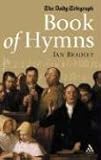
Hymnal 1940 had such wonderful hymns for the occasion that the Sunday closest to Nov. 1 was definitely the high point of low season. But when we were church shopping decades later, there was one particular hymn from our childhood that my wife would ask me to check to see if it was being sung — to determine which parish we would attend for the Sunday closest to Nov. 1. This is the same hymn that Dr. Ian Bradley introduces calls “a magnificent processional song of triumph rejoicing in the communion of saints” in his 2006 Book of Hymns.

That hymn is “For all the saints,” #126 (1st tune) in Hymnal 1940. H40 offers eight of the 11 verses of William W. How’s 19th century text. These are the same eight verses found in in The English Hymnal, which offers three different tunes: Sine Nomine, Sarum, and Luccombe. On this side of the pond, the PECUSA Hymnal 1916 only had the second tune (H16 #295), but the editors of Hymnal 1940 decided to carry both Sine Nomine and Sarum.

Like most Anglican households, the only tune we sing for these words is Sine Nomine written by Ralph Vaughan Williams in 1906 for TEH in his role as TEH music editor. Indeed, this is the only tune that was carried forward to New English Hymnal (#197) and Hymnal 1982 (#287).

I’ve previously called this Ralph Vaughan Williams’ greatest hit (at least for church music), and justifiable so. Searching my bookcase, the eight verses and RVW tune are also found in three LCMS hymnals, The Lutheran Hymnal (#463) Lutheran Worship (#191) and Lutheran Service Book (#677). The same words and tune are also in The Presbyterian Hymnal (1990, H #526) and even the 1975 Baptist Hymnal (#144).

But when TEH came out in 1906 the tune was new so the hymnal helpfully explains: “Suitable or use in procession.” Alas, processionals seem to have fallen out of favor, or RVW would be known to many Anglicans as the author of two great church marching tunes — the other being that Easter/Ascension/Pentecost favorite, Salve Festa Dies.

Bradley helpfully notes how How’s words were originally sung to another tune (called For All the Saints) written for it in 1869 by Joseph Barnby. This is apparently the same tune called Sarum in the 1906, 1916 and 1940 hymnals. Bradley concludes that the RVH tune “is now almost universally used.”

In the original version, the TEH music editor arranged the eight verses into 3 unison, 3 harmony and then 2 unison. H40, H82, LW and NEH, are faithful to this arrangement, while the LSB would certainly allow it but is typeset in a way that does not make the unison verses obvious.

Correction, Oct. 30: As it likes to do, Hymnal 1982 drops the accompanying parts from the pew edition (presumably to sell the accompaniment edition, available for 4x as much.) However, the vocal parts are available for verses 5 and 6, as in the other editions. (Thanks to Raving Revisionist” for pointing out my error in the original version of this posting.)

The editors of H82 also resisted the temptation to bowdlerize the lyrics. Even if H82 is not my favorite hymnal, the missing accompaniment is my only complaint for the RVW classic.

Sunday, November 29, 2009

Setting the canon of Advent

Ever since last year’s posting quoting Leland Ross on the canonical Christmas Carols, I’ve been wanting to make a similar list for Advent hymn. I’ve been investigating this off and on all fall. What I present here is too little and a little later than I would have liked, but it is all I’ve got time to summarize thus far.

I consulted two seminal hymnals (The English Hymnal from 1906 and Hymnal 1940) and one modernist hymnal (Hymnal 1982). The latter was because I was giving advice to someone who uses that hymnal, not because my opinion of it has changed, but it does provide a proxy for what hymns were in common use in PECUSA in the late 1970s. I wish I could have also consulted Hymns Ancient & Modern (1861) — as well as some of my Lutheran hymnals — but ran out of time.

Exactly seven Advent hymns show up in all three hymnals with the same tune. Two of these hymns I’ve previously written about:
  1. “Creator of the stars of night,” tune: Conditor alme Siderum. TEH: 1, H40: 6 Tune 1; H82: 60
  2. “Hark the glad sound! the Savior comes,” tune: Bristol. TEH: 6T1; H40: 7; H82: 71
  3. Hark, a thrilling voice is sounding,” tune: Merton. TEH: 5; H40: 9; H82: 59.
  4. “Lo, he comes with clouds descending,” tune: Helmsley. TEH: 7; H40: 5T2; H82: 57. The Americans also have St. Thomas (H40: 5T1; H82: 58), which seems equally good but is somewhat easier to sing.
  5. O come, O come Emmanuel,” tune: Veni Emmanuel. TEH: 8; H40: 2; H82: 56.
  6. “On Jordan's bank the Baptist's cry,” tune: Winchester New. TEH: 9; H40: 10; H82: 76.
  7. “Wake, awake, for night is flying,” tune: Sleepers, Wake. TEH: 12; H40: 3; H82: 61,62. (Note: This is the subject of a 11/23/2009 podcast at Issues Etc.)
A close runner up is
  1. “Thy kingdom come! On bended knee” appears in all three hymnals but not with the same tune. H40 (#391) and H82 (#615) use St. Flavian while TEH (and its 1986 successor the New English Hymnal) list Irish; the TEH (#504) alternately recommends St. Stephen. This is indexed as a general hymn, but listed by both TEH and H40 as a hymn “also” used for Advent.
Of those that showed up in two hymnals, my personal list of honorable mentions:
  1. Come, thou long-expected Jesus,” tune: Stuttgart, justifiably the first hymn in my favorite hymnal (H40: 1; H82: 66). I find the words by Charles Wesley to be perfect for signaling the beginning of Advent.
  2. “The King shall come when morning dawns,” tune: St. Stephen, H40: 11; H82: 73.
  3. “Christ whose glory fills the skies,” tune: Ratisbon, H40: 153; H82: 7. (H82 inflicts a new tune Christ Whose Glory as hymn #36). This is another H40 “also” Advent hymn, also with words by Wesley.
Four other hymns were found in two of the three hymnals — “O Word, that goest forth on high” (H40, H82), “The world is very evil” (TEH, H40), “Thy kingdom come, O God” (TEH, H40) and “Watchman, tell us of the night” (H40, H82) — but don’t seem to fit into the same category as the first 11. Only the first one (“O Word”) is listed in the Advent section, while the others are recommended alternates in the TEH and/or H40. (H82 doesn’t directly list alternates — I suspect they are in one of the hymnal companions.)

Finally, a 12th hymn is not listed as “Advent” but is recommended by H40 for Advent III and matches the H82 (Year C) reading for Advent II.
  1. “Love divine, all loves excelling,” tune: Hyfrydol, H40: 479T1; H82: 657. TEH and NEH print Charles Wesley’s words with other tunes, but I can’t imagine why anyone would ever sing anything but Rowland Prichard’s greatest hit.
The latter might seem like a stretch, but the phrases “Joy of heaven to earth come down” and “Come, almighty to deliver” do suggest a fit to the Advent theme. I’ll use any excuse to sing Hyfrydol, particularly if I can sing harmony.

Today at church we did two of the holy dozen: “Lo, he comes with clouds descending” and “Come thou long-expected Jesus.” I’m hoping that we’ll sing most of the remainder before Advent is over.

Sunday, May 11, 2008

Favorite Whitsunday hymn

Today is Pentecost, nĆ©e Whitsunday, a once major feast that has fallen into some neglect. Over on GetReligion, Lutheran Mollie Hemingway (one of the would-be saviors of Issues Etc.) had a very good article on the limited coverage of Pentecost, the birth of the church. At church today, we celebrated the occasion with birthday cake, although without the rector’s admonishment (as at our previous church) to wear the liturgical red that evokes the tongues of fire of the first Pentecost.

Today was the first time this year my wife and I got a chance to sing Vaughan Williams’ Salve Festa Dies. It is one of five Whitsunday hymns (plus two alternate tunes) in my favorite hymnal. (It is also one of eight Pentecost hymns — including alternate tunes — in the current PECUSA hymnal, although 33% of the verses have been lobotomized).

The music director at our current church refuses to schedule “Hail Thee Festival Day” at Easter, holding off to the last possible usage. My wife and I grew up singing it at all three major feasts — Easter, Ascension, and Whitsunday — so much that the feasts seem empty without it.

In his wonderful hymn companion, Ian Bradley notes that the Whitsunday version “is the most widely used nowadays, appearing in the hymnbooks of a number of different denominations and not just, as it once did, in those of a High Anglican persuasion.”

Dr. Bradley notes that the Fortunatus poem (reprinted in a 13th century Sarum missal) was the Easter version (the one that comes to mind when I hear the tune), translated for the 1906 COE hymnal by George Gabriel Scott Gillett. He concludes
All the Festival Day hymns owe much of their modern popularity to the vigorous unison tune Salve festa dies which Ralph Vaughan Williams (1872-1958) composed for their appearance in the English Hymnal in 1906.

Sunday, June 17, 2007

English Hymnbook Shopping

Inspired by Catherine Osborne’s blog (and with some advice from Dr. Osborne herself) during this week’s visit to London I set aside time for hymnbook shopping. Using her tips, as well as the Internet (notably UKCBD and Tentmaker), I narrowed my search down to four stores, which I visited (in between other business) over three days. Below are the stores (in order visited)

 
Chapter Two
SPCK
Cornerstone
Pendleburys
Transit Stop
Rail: Woolwich Arsenal
Tube: Westminster
Tube: West Finchley
Rail: Stoke Newington
Bus: Dunsmore
Hymns Ancient & Modern

used

new§
The English Hymnal
used
new†
new
Songs of Praise. Enlarged edition
used
used
The New English Hymnal
new
new
† They only had the limited printing (500 copies) of the Centenary Edition

§ New copies are
New Standard Edition


Overall, I was pretty successful in my shopping this weekend:
  • Hymns Ancient and Modern. This was the first standardized British hymnal. I bought three at Chapter Two: 1st Edition with Appendix (1869); 2nd Edition with 2nd Supplement (1906); Standard Edition (1916). Because there were so many editions, I need to compare these and do some research to see if I need any more.
  • The English Hymnal (1906). This is the book Dr. O praises without ceasing, and features Ralph Vaughan Williams as music editor (and composer of several new tunes) and Pearcy Dearmer as editor of the texts.
  • Songs of Praised, Enlarged Edition (1931). The original 1925 edition appears to have quickly gone out of print, but used copies of the 1931 are readily available.
I didn’t buy these in-print hymnals, available new at several stores and at Amazon UK:
  • Hymns Ancient & Modern, New Standard Version (1983). Probably has a nostalgia value for hymn singers, but no historical significance for my interests in tracing the impact of English hymnals upon those in the US.
  • The English Hymnal, Revised Edition (1933). Also edited by Vaughan Williams and Dearmer. This is the hymnal used by two generations in the Church of England, and has significant changes from the earlier edition. This is to Dr. Osborne what the 1940 Hymnal is to me. Obviously I’ll have to get it, but I decided not to pay £37 for a new copy at this time.
  • The New English Hymnal (1986). No influence (yet) on American hymnals, but I might someday get it to contrast the parallels between Hymnal 1940->Hymnal 1982 and TEH->NEH.

As it turns out, my greatest successes were at the two used bookshops, Chapter Two (East of The City) and Pendleburys (behind the Stamford Hill library). Both had 1½ racks of used hymnals, although Pendleburys' was temporarily out of most of the COE books. Overall, the Chapter Two books were older and cheaper, with almost nothing at Pendleburys printed before WW II. Fittingly, Pendleburys is in the annex to a church (Stamford Hill United Reformed Church) — as Chapter Two once was, until their landlord church needed the space back and they had to move.

Both also had an assortment of other Protestant English hymnals (Baptist, Congregational, Methodist, Presbyterian). However, I hadn’t researched those before I came, and so didn’t have a shopping list. To analyze the parallel development of Hymns Ancient & Modern and The English Hymnal, I will be getting The Church Hymnary (Church of Scotland and allied Presbyterian churches), both in the original (1898) and revised (1927) editions, but probably not the third (1973).

I plan on going back to both stores on a future trip. SPCK had only a token used collection, but because of its location (just south of Westminster Abbey) is more convenient than any of the others. Cornerstone was very friendly, but not a place for researching liturgical music; it was almost identical to a standard U.S. “Christian” bookstore, so that it had any hymnals at all suggests the dominant role that Anglican worship plays (or once played) in England, compared to the centuries-old religious pluralism of the US .

The hymnals I saw more often than any other were The Celebration Hymnal (must be the current bestseller), Complete Mission Praise and the Redemption Hymnal (1951, but now back in print). Both are outside the scope of my current interest.

I also acquired some interesting books on hymns, which will be another posting. Only Pendleburys had any sort of assortment of books here, with three shelves (half of a rack) on hymnody, so that’s how they got my money.

Saturday, April 7, 2007

Ralph Vaughan Williams’ Easter contribution

For decades, Easter for me has been associated with one particularly majestic tune by English composer Ralph Vaughan Williams (1872-1958). Of course, I’m talking about Salve Festa Dies. Or as (every Holy Week) my wife asks about our plans for Easter services: “Will they be playing ‘Hail thee, festival day’?”

The title of the Vaughan Williams tune comes from the first phrase of the Latin poem by Saint Venantius Honorius Fortunatus (ca. 530-600). Four centuries later, part of the poem had been adapted as a liturgical hymn with a refrain and 13 verses that begin:
R. Salve, festa dies, toto venerabilis aevo,
Qua Deus infernum vicit et astra tenet.
1. Ecce, renascentis testatur gratia mundi
Omnia cum Domino dona redisse suo.
2. Namque triumphanti post tristia tartara Christo
Undique fronde nemus, gramina flore favent.
3. Legibus inferni oppressis super astra meantem
Laudant rite Deum lux, polus, arva, fretum.
4. Qui crucifixus erat, Deus, ecce, per omnia regnat,
Dantque creatori cuncta creata precem.
5. Nobilitatis anni, mensum decus, arma dierum,
Horarum splendor, scripula puncta fovent.
6. Christe, salus rerum, bone conditor atque redemptor,
Unica progenies ex deitate patris, …
When I was a choirboy, I didn’t know who Vaughan Williams was, other than I saw his name as the composer of various hymns in my hymnal. A quick survey of the 1940 Hymnal shows his name listed next to 16 hymns — nine as the arranger or harmonizer, and seven as the composer. Three of those seven are Salve Festa Dies, one each for Easter, Ascension and Whitsunday. These three survive into the 1982 Hymnal (although Whitsunday is now “Pentecost”), as do 3/4 of the other RVW hymns.

I also didn’t know that RVW spent two years of his life, 1904-1906, editing the most durable and influential English-language hymnal of the 20th century. The English Hymnal of 1906 remained the Church of England hymnal for 80 years, until it was replaced by The New English Hymnal. In his preface, Vaughan Williams emphasized the diversity of musical sources for The English Hymnal, including “Tunes by 19th and 20th century composers.” Among the latter category were his own compositions, including Salve Festa Dies, composed in 1906. Interestingly, the 1906 hymnal lists 11 verses, versus nine in the 1940 (US) Hymnal, and six in the 1986 NEH. Some claim it is hard to sing due to the translation of the Latin couplets or perhaps the three different meter and melodies; whatever the reason, it seems that much more satisfying to sing once mastered.

Salve Festa Dies didn’t make it into the American New Hymnal of 1916, but instead makes its first appearance on this side of the pond in the 1940 Hymnal. The latter also includes six traditional English melodies arranged by RVW for the EH from the hundreds he compiled during the period 1903-1915.

Father Kelley of St. Mary of the Angels points out there is a significant error in the 1940 Hymnal. The phrase “Qui crucifixus erat, Deus, ecce, per omnia regnat” is rendered in the 1940 (and 1982) Hymnal as “He who was nailed to the cross is Lord and the ruler of all men.” I don’t have the 1906 EH (or 1931 Songs of Praise) at hand, but even I know that “Deus” is translated ”God” and not “Lord.”

[CD cover]When a few years ago I considered starting a (Anglican) sacred music Internet radio station, I accumulated a Godly collection of choral CDs, including two of Vaughan Williams music. My clear favorite was “A Vaughan Williams Hymnal,” where the Trinity College choir sings all the stirring hymns, including Salve Festa Dies. However, I only recognized two hymns from the Winchester Cathedral CD, “Vaughan Williams: Hymns and Choral Music,” which (without checking the actual composition dates) sounds like it’s mostly his mid-20th century music.

Both CD compilations know a hit when they hear one: both have the most famous (and I daresay most popular) Vaughan Williams hymn, Sine Nomine, also introduced with the 1906 hymnal.